Young children learn about the world by observing, exploring and interacting with their surroundings. Everyday objects, toys and household activities can become valuable learning opportunities for preschoolers. Parents do not need expensive educational materials to introduce basic concepts. With a little creativity, they can teach colours, shapes and numbers through simple activities that make learning enjoyable and meaningful.
Teach Colours Through Everyday Objects
Children begin recognising colours by noticing differences in the objects around them. Parents can encourage this learning during daily routines rather than relying only on books or flashcards.
Try a Colour Hunt at Home
Choose one colour and ask your child to find objects that match it. For example, look for a red toy, a blue cup or a yellow pillow. Gradually introduce other colours as your child becomes familiar with the activity.
You can also talk about colours while getting dressed, eating meals or playing with toys. Asking questions such as, “Can you find something green?” encourages children to observe their surroundings and identify colours independently.
Introduce Shapes Through Play
Recognising shapes helps children notice patterns and understand how objects differ. Start with familiar shapes such as circles, squares, triangles and rectangles.
Find Shapes Around the House
Look for circular plates, rectangular books, square cushions and triangular shapes in pictures or toys. Explain the shape in simple words and encourage your child to find similar objects.
Building blocks, shape sorters and simple drawing activities can also help children recognise shapes. Let your child explore at their own pace instead of expecting them to memorise every shape immediately.
Make Number Learning Fun
Early number learning becomes easier when children can connect numbers with real objects. Instead of asking children to memorise numbers repeatedly, introduce counting during everyday activities.
Count Toys, Fruits and Household Items
Ask your child to count three toys, four building blocks or five pieces of fruit. You can also count steps while walking or count claps during a favourite rhyme.
For younger learners, begin with small quantities and demonstrate how each number corresponds to one object. Gradually introduce larger numbers as their understanding develops.
Combine Colours, Shapes and Numbers in One Activity
Combining different concepts can make preschool learning activities at home more engaging.
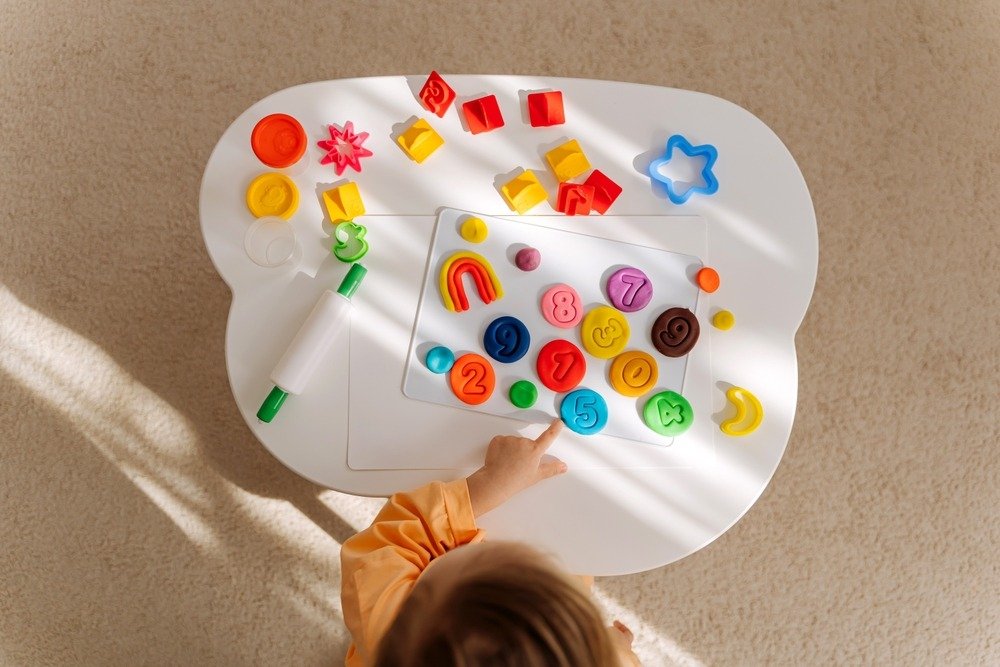
Try a simple sorting game using large, colourful blocks. Ask your child to find two red blocks, three blue blocks or all the circular objects in a collection. This encourages children to recognise colours, identify shapes and practise counting during the same activity.
Keep the instructions simple, offer encouragement and allow your child to experiment. The aim is to build familiarity through play, not to complete a perfect task.
Tips for Parents to Make Learning Enjoyable
Keep activities short: Follow your child’s interest and take breaks when needed.
Use everyday opportunities: Introduce learning during meals, dressing, shopping and playtime.
Ask simple questions: Encourage observation with questions such as, “What colour is this?” or “How many blocks can you see?”
Celebrate effort: Appreciate curiosity and participation instead of focusing only on correct answers.
Avoid comparisons: Children develop skills at different rates, so give your child time to practise.
How Duscha Supports Learning Through Play
At Duscha Preschool, a supportive, Montessori-based learning environment encourages children to explore materials, recognise patterns and participate in hands-on experiences. Activities involving colours, shapes and numbers can help young learners develop observation, early mathematical thinking and problem-solving skills. When children are encouraged to explore at their own pace, learning can become a positive part of their everyday experiences.
Conclusion
Teaching colours, shapes and numbers does not have to feel like a formal lesson. Everyday objects, playful conversations, sorting games and counting activities can introduce important early learning concepts naturally. By making time for exploration and encouraging curiosity, parents can help children build a strong foundation for future learning.